Art movement
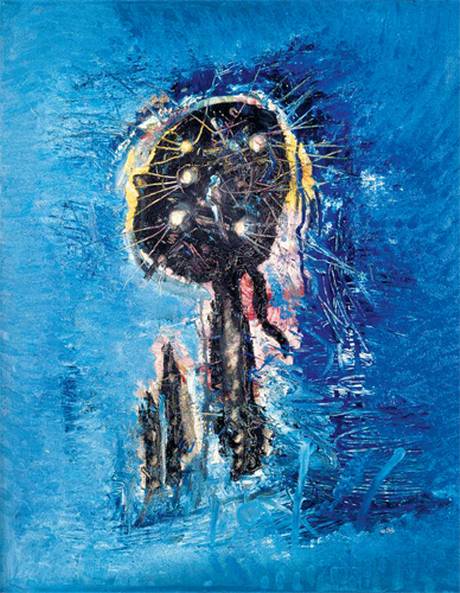
Tachisme, also known as Tachism or Abstraction lyrique, is a distinctive French style of abstract painting that gained popularity during the 1940s and 1950s. It emerged as a response to the postwar period and was part of a larger movement known as Art Informel. Tachisme can be seen as the European counterpart to American abstract expressionism, although there are noticeable stylistic differences. While American abstract expressionism tended to be more “aggressively raw,” Tachisme embraced a more intuitive and spontaneous approach to artistic expression.
The term “Tachisme” was first used in 1951 and was widely popularized by French critic and painter Michel Tapié in his book “Un Art autre” published in 1952. It was considered a reaction against Cubism and its characteristic features include spontaneous brushwork, drips, and blobs of paint directly from the tube, as well as elements reminiscent of calligraphy. Artists such as Jean-Paul Riopelle, Wols, Jean Dubuffet, Pierre Soulages, Nicolas de Staël, Hans Hartung, Gérard Schneider, Serge Poliakoff, Georges Mathieu, and Jean Messagier were important figures associated with Tachisme.
Tachisme shares a close relationship with Art Informel, which in the context of 1950s French art criticism, denoted a lack or absence of form itself rather than just an informal art style. It was characterized by an unstructured and non-premeditated approach, emphasizing spontaneity and a rejection of predetermined artistic conventions. Tachisme and Art Informel represented a departure from geometric abstraction and a shift towards a more intuitive and unrestricted form of artistic expression.
 Emad Taha