Art movement
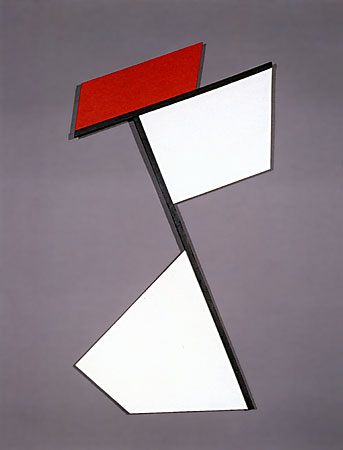
Concrete art is an extraordinary art movement that places a strong emphasis on abstraction. It was Theo van Doesburg, a prominent figure associated with the De Stijl art movement, who coined the term “concrete art” in 1930. He founded the group Art Concret and outlined its principles in a powerful manifesto titled “The Basis of Concrete Art.” This manifesto, which was signed by four other talented artists including Otto G. Carlsund, Jean Hélion, and Leon Tutundjian, stated that concrete art should not refer to or allude to entities found in the natural world. Unlike abstract art, concrete art is conceived to emanate “directly from the mind” and aims to be more cerebral.
Concrete art is characterized by its use of basic visual features such as planes, colors, and forms. Sentimentality is intentionally absent from this art form, and in some cases, the artist’s hand is almost indistinguishable, giving the impression that the artwork was created by a machine. While abstract art finds inspiration in the components of the natural world, concrete art is rooted in geometry. A description of concrete art often relies heavily on the formal qualities of the artwork, steering clear of lyricism, dramaticism, and symbolism.
The term “concrete art” gained popularity through the efforts of artists like Josef Albers, and Max Bill played a significant role in its promotion. Bill organized the first international exhibition dedicated to concrete art in 1944. The movement fully blossomed in Northern Italy and France during the post-war era, primarily through the works of the Movimento d’arte concreta (MAC) and Espace groups. In 1960, Max Bill curated a groundbreaking exhibition in Zurich that showcased 50 years of concrete art’s development.
Concrete art, along with optical art, kinetic art, and programmatic art, unites groups of artists worldwide who share similar artistic concerns. This remarkable movement continues to inspire and captivate audiences with its bold and confident approach to abstraction.
 Emad Taha