Art movement
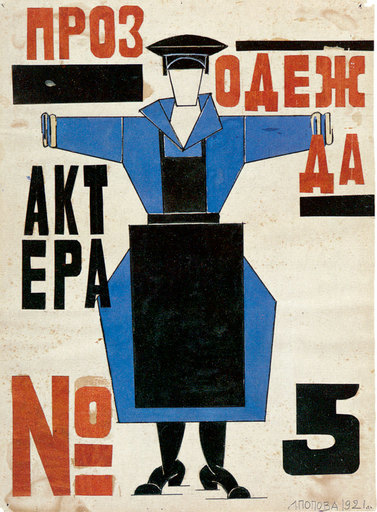
Constructivism emerged as a groundbreaking artistic and architectural philosophy in Russia during 1913, spearheaded by the visionary Vladimir Tatlin. Rejecting the notion of art existing in isolation, Tatlin sought to create art that actively engaged with the world and served social purposes. This movement exerted a profound influence on the entire spectrum of 20th century art, leaving an indelible mark on major movements such as Bauhaus and De Stijl. Its impact extended beyond the realm of art, permeating fields such as architecture, graphic design, industrial design, theater, film, dance, fashion, and to some extent, even music.
The term “Construction Art” was initially used by Kazimir Malevich in a derogatory manner to describe the work of Alexander Rodchenko in 1917. However, the term began to acquire a positive connotation with Naum Gabo’s Realistic Manifesto of 1920. Notably, Aleksei Gan adopted this term as the title of his book “Constructivism,” published in 1922. Constructivism evolved from the backdrop of Russian Futurism, specifically Vladimir Tatlin’s “counter reliefs” exhibited in 1915. Sculptors Antoine Pevsner and Naum Gabo, influenced by Kazimir Malevich’s Suprematism, subsequently developed an industrial and angular style that epitomized Constructivism’s geometric abstraction.
The theoretical and practical foundations of Constructivism were largely shaped by extensive debates at Moscow’s INKhUK (Institute of Artistic Culture) between 1920 and 1922. After ousting its first chairman, Wassily Kandinsky, due to his “mysticism,” the First Working Group of Constructivists, including Liubov Popova, Alexander Vesnin, Rodchenko, Varvara Stepanova, as well as theorists Aleksei Gan, Boris Arvatov, and Osip Brik, formulated a definition of Constructivism centered around two key concepts: faktura, the inherent material qualities of an object, and tektonika, its spatial presence. Initially, Constructivists focused on three-dimensional constructions as a means of engaging with industry, as exemplified by Rodchenko, Stepanova, Karl Ioganson, and the Stenberg brothers’ compositions showcased at the OBMOKhU (Society of Young Artists) exhibition. Subsequently, this definition expanded to encompass designs for two-dimensional works such as books and posters, with montage and factography emerging as pivotal concepts.
In addition to their involvement in industrial design, Constructivists were deeply engaged in public festivals and street designs for the Bolshevik government following the October Revolution. Notably, Vitebsk became a hotbed of Constructivist activity, with Malevich’s UNOVIS Group creating propaganda plaques and buildings, most notably El Lissitzky’s iconic poster “Beat the Whites with the Red Wedge” (1919). Inspired by Vladimir Mayakovsky’s proclamation that “the streets are our brushes, the squares our palettes,” artists and designers actively participated in public life during the tumultuous period of the Civil War. One remarkable example was the proposed festival for the Comintern Congress in 1921 by Alexander Vesnin and Liubov Popova, which echoed the constructions of the OBMOKhU exhibition as well as their theatrical endeavors. Constructivism also shared significant ideological overlap with Proletkult, as both movements embraced the idea of forging a completely new culture. Moreover, several Constructivists played integral roles in the “ROSTA Windows,” a Bolshevik public information campaign during the early 1920s. Notably, poet-painter Vladimir Mayakovsky and Vladimir Lebedev created some of the most iconic artworks for this initiative.
 Emad Taha