Art movement
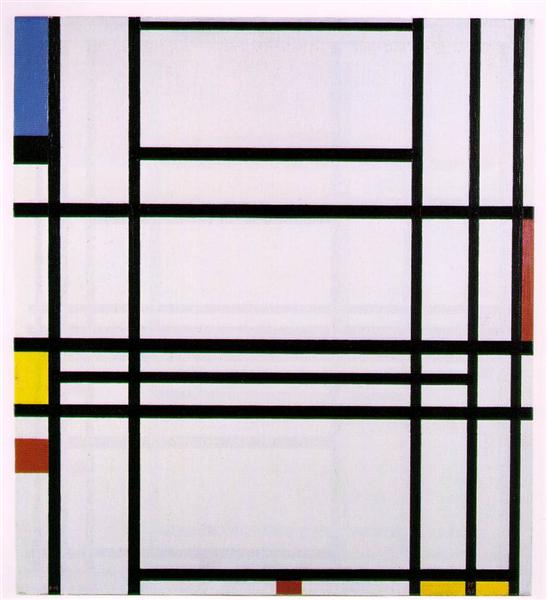
De Stijl: The Dutch artistic movement known as De Stijl, or “The Style,” emerged in Leiden in 1917. It encompassed artists, architects, and the publication of a journal bearing the same name. De Stijl aimed for pure abstraction and universality, advocating for a reduction to the essential elements of form and color. The movement’s visual compositions embraced vertical and horizontal lines, as well as limited the palette to black, white, and primary colors.
The principal members of De Stijl were painters Piet Mondrian, Vilmos Huszár, and Bart van der Leck, as well as architects Gerrit Rietveld, Robert van ‘t Hoff, and J.J.P. Oud. Their artistic philosophy, known as neoplasticism or the new plastic art, formed the foundation of their work. Mondrian, in particular, defined neoplasticism in his essay “Neo-Plasticism in Pictorial Art,” emphasizing the abstraction of form and color through straight lines, primary colors, squares, and rectangles. The movement embraced the geometry of the straight line, the square, and the rectangle, and played with asymmetry, positive and negative elements, and non-objective forms and lines.
The name “De Stijl” supposedly originates from Gottfried Semper’s book “Der Stil in den technischen und tektonischen Künsten oder Praktische Ästhetik” (1861–3), which was mistakenly associated with materialism and functionalism. De Stijl artists, also known as Neo-Plasticists, sought to transcend the ever-changing appearance of natural things, guiding the audience towards an underlying spiritual vision. Embracing the principles of simplicity and abstraction, De Stijl utilized straight horizontal and vertical lines, rectangular forms, and a limited color palette of red, yellow, blue, black, white, and gray. The movement rejected symmetry in favor of aesthetic balance achieved through opposition. This concept is best exemplified in the construction of crossing joints, commonly seen in carpentry.
In their three-dimensional works, De Stijl artists often positioned vertical and horizontal lines in separate layers or planes, allowing each element to exist independently and unobstructed. This approach can be observed in iconic pieces such as the Rietveld Schröder House and the Red and Blue Chair.
 Emad Taha