Art movement
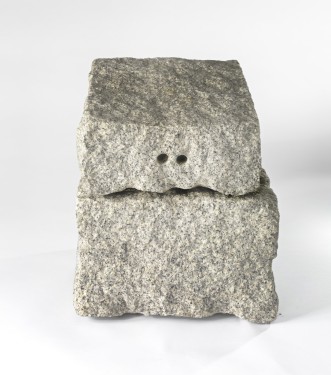
Postminimalism, a term coined by Robert Pincus-Witten in 1971, encompasses a diverse range of artistic expressions that go beyond the aesthetic of minimalism. While it is commonly used in relation to music and visual arts, it can be applied to any field that draws inspiration from minimalism. In music, postminimalism refers to works that follow the principles of minimal music.
In the realm of visual art, postminimalist artworks either draw from minimalism as an aesthetic or conceptual reference point. These works often involve simple materials and everyday objects, sometimes adopting a formalist aesthetic. However, due to the wide array of artists associated with postminimalism, it is challenging to establish a definitive set of characteristics that unify them.
Eva Hesse is recognized as a postminimalist artist who incorporates “grids” and “seriality” – themes commonly found in minimalism – in her work. Diverging from the machine-produced or custom-made nature of minimalism, Hesse’s art introduces a human element through the use of hand-made techniques. Richard Serra is another noteworthy post-minimalist artist.
In the realm of music, postminimalism refers to compositions influenced by minimal music. It is often classified within the broader category of art music. Writer Kyle Gann applies the term more strictly to define the style that thrived in the 1980s and 1990s, characterized by the utilization of minimalist techniques such as additive and subtractive processes. Postminimalism also displays a capacity to incorporate influences from world and popular music, such as Balinese gamelan, bluegrass, and Jewish cantillation.
For a musical style derived from minimalism, one may explore Totalism (music).
 Emad Taha