Art movement
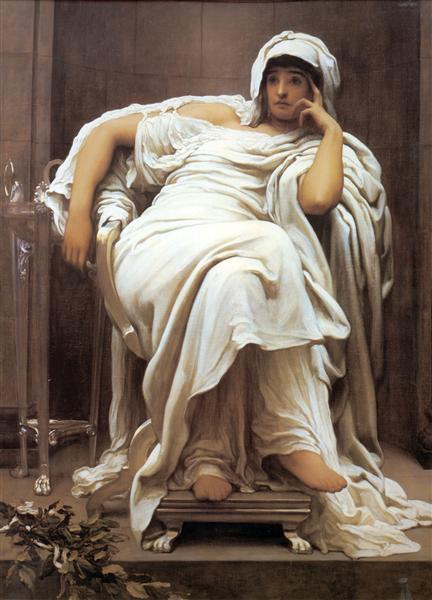
Academic art, also known as Academicism, is a distinguished style of painting and sculpture that emerged under the influence of European art academies. This particular artistic movement was deeply shaped by the standards of the French Académie des Beaux-Arts, which encompassed the principles of Neoclassicism and Romanticism. Academic art sought to synthesize the styles of both movements, culminating in the remarkable works of renowned artists such as William-Adolphe Bouguereau, Thomas Couture, and Hans Makart. It is often referred to as “academism,” “academicism,” “L’art pompier,” or “eclecticism,” and is sometimes linked with “historicism” and “syncretism.”
The roots of academic art can be traced back to the establishment of the first art academy in Florence, Italy, on January 13, 1563, under the patronage of Cosimo I de’ Medici. The academy, known as the Accademia e Compagnia delle Arti del Disegno (Academy and Company for the Arts of Drawing), functioned as two distinctive branches. The Company was open to all working artists in Tuscany, while the Academy consisted of the most eminent artistic figures of Cosimo’s court. Its primary objective was to oversee the artistic production of the Medicean state. Students within this institution received comprehensive training in the “arti del disegno” (arts of drawing), which encompassed disciplines such as anatomy and geometry. A decade later, Rome witnessed the establishment of another prestigious academy, the Accademia di San Luca, which focused more on art theory and education than its Florentine counterpart. Notably, in 1582, Annibale Carracci founded the influential Academy of Desiderosi in Bologna, despite lacking official support. Although it functioned more as a traditional artist’s workshop, Carracci’s decision to label it as an “academy” reflected the prevalent allure of the concept during that era.
The Accademia di San Luca later served as a model for the Académie royale de peinture et de sculpture, founded in France in 1648, which eventually evolved into the Académie des beaux-arts. The establishment of the Académie royale de peinture et de sculpture aimed to distinguish artists “who were gentlemen practicing a liberal art” from craftsmen engaged in manual labor. This emphasis on the intellectual aspect of art-making significantly influenced the subjects and styles of academic art.
Following its reorganization in 1661 by Louis XIV, who sought to centralize artistic activity in France, a heated controversy arose among the members of the Académie royale de peinture et de sculpture, ultimately shaping artistic attitudes throughout the century. Known as the “battle of styles,” this conflict revolved around the question of whether to follow the artistic principles of Peter Paul Rubens or Nicolas Poussin. The “poussinistes,” followers of Poussin, argued that line (disegno) should prevail in art due to its appeal to intellect, while the “rubenistes,” followers of Rubens, contended that color (colore) should dominate art, evoking a stronger emotional response.
Academic art stands as a testament to the rich heritage of European art academies and their profound influence on artistic expression.
 Emad Taha