Art movement
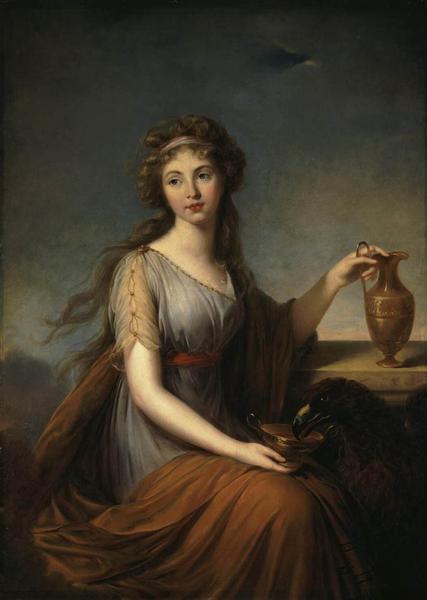
Europeans of the 18th century Age of Enlightenment had a clear vision for their artwork and architecture. They sought to mirror the ideals of the ancient Greeks and Romans, drawing inspiration from the archaeological rediscoveries of Pompeii and Herculaneum in Rome. This gave rise to Neoclassicism, a movement that infused art and architecture with the timeless principles of the past.
The artists and architects of this period embraced a return to the study of science, history, mathematics, and anatomical correctness. They rejected the frivolous vanity culture of the Rococo era and the art produced for the courts. Neoclassicism brought about a profound shift in artistic priorities.
Neoclassical artists adhered to the hierarchy of painting established by the French Royal Academy of the Arts in 1669. At the top of this hierarchy was history painting, which encompassed subjects from the Bible, classical mythology, and historical events. It was considered the most prestigious genre of painting. Portraiture, genre painting, landscapes, and still lifes followed in descending order. This hierarchy influenced artistic evaluation and the financial value of artworks.
Nicolas Poussin and Claude Lorrain were revered as the epitome of history painting in their time, and they became primary influences on Neoclassicism. Lorrain’s landscapes blended naturalistic detail and the play of light with mythological and biblical figures. Poussin, on the other hand, emphasized clarity, logic, and strong lines in his compositions. His artwork, such as “The Death of Germanicus,” influenced renowned artists like Jacques-Louis David and Benjamin West.
The inspiration for Neoclassicism came from the discovery of ancient Greek and Roman archaeological sites and artifacts. Popular illustrated reports on various travel expeditions spread the knowledge of these findings throughout Europe. Scholars like James Stuart and Nicholas Revett diligently cataloged and recorded the past in works such as “Antiquities of Athens.” Young European aristocrats embarked on the Grand Tour, visiting Italy to see these ancient works firsthand. Artists like Pompeo Batoni and Antonio Canova capitalized on this influx of aristocratic tourists, opening their studios and creating commissioned works.
The aesthetic and theory of Neoclassicism were largely shaped by art historian Johann Joachim Winckelmann. His influential work, “Thoughts on the Imitation of Greek Works in Painting and Sculpture,” argued for “noble simplicity and calm grandeur” as the ideal artistic expression. Winckelmann believed that imitating the ancients was the path to greatness in art. His ideas resonated with intellectuals of the time and continued to influence generations of thinkers.
Neoclassical painting also found prominent advocates in Anton Raphael Mengs and Benjamin West. Rome became the center of the movement, attracting a circle of artists around Mengs and Winckelmann. Mengs’ frescoes, which depicted mythological subjects, earned him the reputation of being the greatest painter of his day. His influence extended to artists such as Angelica Kauffman, John Flaxman, and Gavin Hamilton. Jacques-Louis David, who would become the leader of Neoclassical painting, also drew inspiration from Mengs during his time in Rome.
Neoclassicism developed alongside the Enlightenment, a period known as “The Age of Reason” characterized by a strong emphasis on science, reason, and exploration. Neoclassical artists believed that art had the power to civilize, reform, and transform society, paralleling the societal changes brought about by the Industrial Revolution. In Britain, artists like Benjamin West used Neoclassicism as a vehicle to convey moral virtue and rationality, often inspired by scientific invention. Joseph Wright of Derby, for example, portrayed scientific experiments in his artworks.
In France, the later period of Neoclassicism further emphasized strong lines, austere classical settings, and simplified elements to convey moral strength. Jacque-Louis David, with his masterpiece “Oath of the Horatii,” became the dominant figure of the movement. This painting exemplified the direction Neoclassical painting was heading. Although initially commissioned by King Louis XVI, it later became associated with the revolutionary spirit of France. The French Revolution, a time of significant political and social upheaval, adopted the salute of the Horatii brothers depicted in David’s painting. David’s influence was so profound that this period of Neoclassicism became known as “the Age of David.” He mentored notable artists such as Anne Louis Girodet-Trioson, François Gérard, Antoine Jean Gros, and Jean Auguste Dominique Ingres.
In the realm of sculpture, Jean-Baptiste Pigalle and his student Jean-Antoine Houdon played crucial roles in advancing Neoclassicism. Pigalle’s sculpture “Mercury” was hailed as comparable to the best Greek masterpieces. Houdon, in turn, became renowned for his portrait busts and continued to lead the Neoclassical sculpture movement in France. Antonio Canova, an Italian sculptor, was considered the foremost exponent of Neoclassical sculpture, with his works surpassing even those of the ancient Greek sculptor Praxiteles. In England, John Flaxman exerted significant influence through his figures, reliefs, and Neoclassical designs for Josiah Wedgwood’s Jasperware.
The decline of Neoclassicism began with the rise of Romanticism. In the early 19th century, these two styles coexisted in rivalry, with Ingres standing as a stalwart of Neoclassical tradition and Delacroix championing individual sensibility and emotion. Eventually, Neoclassicism as a movement faded away in the 1850s. However, echoes of its influence persisted. Ingres’ figurative treatments and stylized distortions left a lasting impact on artists such as Edgar Degas, Auguste Renoir, Henri Matisse, and Pablo Picasso. David’s work resurfaced in the mid-19th century and inspired artists like Picasso and Edvard Munch. Contemporary artists, including Vik Muniz and Cindy Sherman, have reimagined famous Neoclassical works in their own artistic expressions.
Although Neoclassicism may have given way to subsequent art movements, its legacy and impact on Western art are undeniable. The movement revolutionized artistic principles, drew inspiration from the classics, and reflected the philosophical and societal changes of the Enlightenment era.
 Emad Taha