Art movement
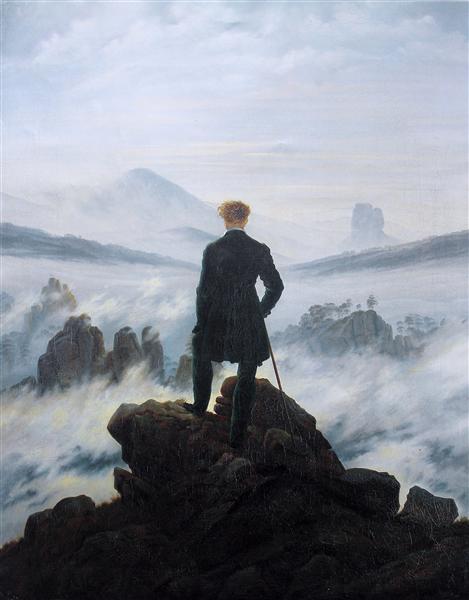
Romanticism, also known as the Romantic era or the Romantic period, emerged as a powerful artistic, literary, musical, and intellectual movement in Europe during the late 18th century. It reached its zenith between 1800 and 1850, leaving an indelible mark. This period was characterized by its unwavering focus on emotion and individualism, as well as its exaltation of the past and nature, favoring the medieval over the classical. The Romantics emerged as a response to the Industrial Revolution, the aristocratic norms of the Age of Enlightenment, and the scientific rationalization of nature — all hallmarks of modernity. Though it found its strongest expression in the visual arts, music, and literature, Romanticism also influenced historiography, education, and the natural sciences. Moreover, Romanticism exerted a profound and intricate impact on politics. While initially linked with liberalism and radicalism, its lasting contribution lay in fostering the growth of nationalism.
Central to Romanticism was the emphasis on intense emotions as a genuine source of aesthetic experience. It elevated feelings of apprehension, horror, terror, and awe, particularly when confronted with the new aesthetic categories of the sublime and the beauty of nature. Folk art and ancient customs were elevated to a noble status, and spontaneity was regarded as a desirable characteristic, as seen in the realm of musical improvisation. In direct contrast to the rationalism and classicism of the Enlightenment, Romanticism revived elements of medieval art and narrative, perceived as genuinely medieval, in an attempt to escape the challenges of population growth, urban sprawl, and industrialization.
While the German Sturm und Drang movement, which advocated for intuition and emotion over Enlightenment rationalism, laid the roots of Romanticism, the French Revolution and its ideologies also played a proximate role in shaping the movement. Romanticism highly esteemed the achievements of “heroic” individualists and artists, believing that their examples would elevate society as a whole. Furthermore, it championed the imagination of the individual as a critical authority, free from classical notions of artistic form. A sense of historical and natural inevitability, a zeitgeist, permeated the representation of Romantic ideas. In the latter half of the 19th century, Realism emerged as a contrasting force to Romanticism. The decline of Romanticism during this period can be attributed to various factors, including socio-political shifts and the rise of nationalism.
The essence of Romanticism lies in the unrestricted expression of an artist’s emotions. The importance placed on emotion by the Romantics is best captured in the words of the German painter Caspar David Friedrich, who proclaimed that “the artist’s feeling is his law.” For William Wordsworth, poetry needed to originate as “the spontaneous overflow of powerful feelings,” which the poet would then recollect in a state of tranquility, evoking a new and corresponding emotion that could be shaped into art. It was believed that the content of art had to spring from the artist’s imagination, with minimal interference from artificial rules dictating the composition of a work. Samuel Taylor Coleridge and others asserted that the imagination, at least in the case of a skilled creative artist, would unconsciously follow natural laws through artistic inspiration if left to its own devices. Additionally, the influence of models and references from other works was deemed to stifle the creative imagination, emphasizing the importance of originality. The concept of genius, an artist capable of creating original works ex nihilo, lies at the heart of Romanticism, while being derivative was considered the gravest offense. This notion is commonly referred to as “romantic originality.”
 Emad Taha